Congress Should Answer the Phone: Constituent Service for FL-23
Paola Branda's standard for FL-23 constituent service: a reachable office, clear communication, protected privacy, honest casework, and reliable follow-through.
Congress debates national policy, but a congressional office also has a responsibility close to home: helping constituents navigate the federal government.
When a Palm Beach resident calls about a delayed record, a benefit, a passport, a federal agency, or another casework question, the response should not be silence or an endless handoff.
Paola Branda believes FL-23 deserves a congressional office that is reachable, respectful, careful with private information, honest about its authority, and accountable for the next step.
Make the office easy to reach
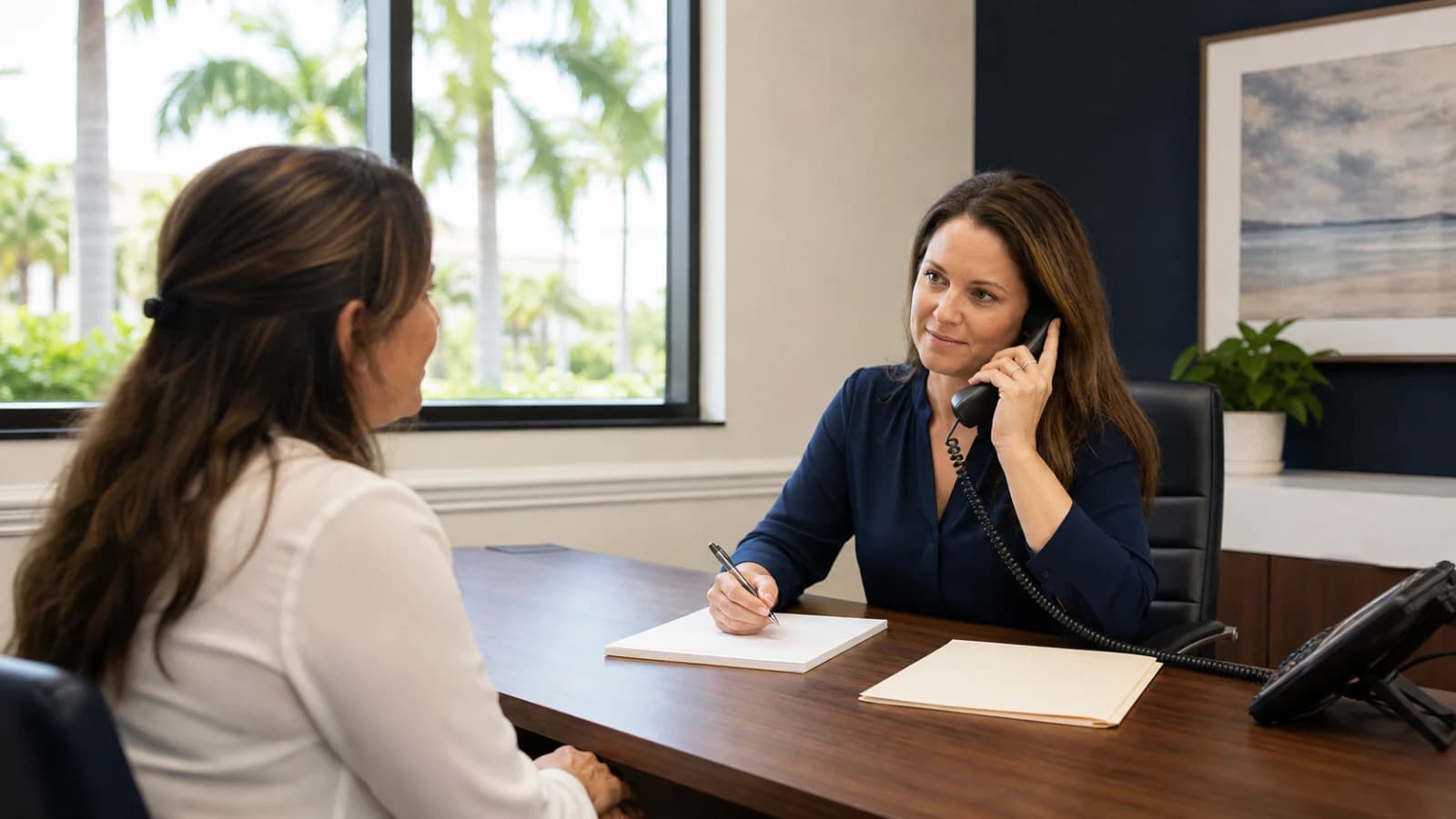
Public service starts with a clear front door. Constituents should be able to find accurate contact information, understand how to request help, and receive confirmation that their message or casework request arrived.
The process should use plain language and account for accessibility and language needs. It should serve every constituent with the same respect, regardless of neighborhood, background, or political affiliation.
No one should need a personal connection or political vocabulary to ask a federal office for help.
Listen carefully and route requests correctly
Good service begins by understanding the request. Staff should listen, ask useful questions, explain what information is needed, and avoid making promises they cannot keep.
Not every problem falls within a congressional office's authority. When it does not, the office should say so plainly and, when possible, identify the appropriate public resource. When it does, the constituent should know who is handling the request and what happens next.
Clear routing saves time for families, seniors, veterans, legal immigrants, workers, and small businesses already trying to solve a difficult problem.
Protect private information
Federal casework can involve sensitive personal documents, identification numbers, medical information, immigration records, military records, or financial details.
A responsible office should explain why information is needed, use secure processes, limit access, and never turn a private case into a public story without clear permission.
Privacy is not paperwork. It is part of respecting the person asking for help.
Be honest about what congressional casework can do
A congressional office cannot order an agency to produce a preferred outcome or ignore the law. It can request information, help identify missing steps, communicate with an agency, and keep a constituent informed.
That distinction should be clear from the beginning.
Residents deserve an acknowledgment, a point of contact, realistic expectations, and updates when the office receives new information. If nothing has changed, the office should still communicate the status rather than letting a request disappear.
A truthful answer may not always be the answer someone hoped to receive. It should still be timely, understandable, and paired with the most useful lawful next step available.
Measure the service, not the publicity
Accountability applies to casework too. An office should track response times, unresolved requests, recurring agency problems, language-access needs, and whether constituents receive clear closure—while protecting personal information.
Patterns can also inform legislation. If many families, seniors, veterans, legal immigrants, or small businesses encounter the same federal barrier, Congress should examine whether the process itself needs reform.
The goal is not to turn private problems into political promotion. It is to improve service, identify recurring failures, and make government more responsive to the people it is supposed to serve.
Public office should feel like public service
Paola is a legal immigrant from Venezuela, a wife and mother of two, a Doctor of Education in Educational Leadership, a 15+ year educator, a World Languages Department Head, a business operations leader, a humanitarian aid leader, and the founder of Crescendo Step.
Those roles taught her that service depends on preparation, clear communication, respect for every person, and completing the next step. That is the standard she wants to bring to Congress.
Responsive constituent service supports Paola's seven America First priorities for FL-23: lower costs and taxpayer relief; secure borders, legal immigration, and safe communities; education, parents, and opportunity; senior security and healthcare costs; freedom, faith, and religious liberty; clean water, the Everglades, and Florida resilience; and accountability and transparency.
America First. Freedom Always.
Tell Paola what responsive constituent service should look like for your family, business, or community.